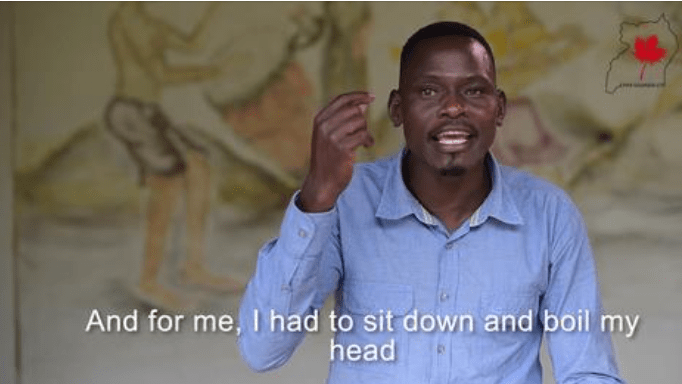
Reacting to Robert Oluka’s video in which he shared his observations of the “futility of youth hope and aspirations when they join higher institutions of learning,” a follower of our CPAR Uganda on Facebook, Okello Ambrose Bob, a teacher, aptly asserted that: “there are actually no jobs but a lot of work which the youths can do.”
Such work that youths can do to actually earn a living, perhaps, includes, for example, the following as shared by another follower of our Facebook page in reaction to Oluka’s video:

“I had another daughter also pursuing Bachelor degree at the University, during the schooling breaks she could knit swimming costumes – bra and pants. And when campus opened, she was able to sell all that she had knitted. She told me she got three hundred and fifty thousand.
Ms. Rose Aceng, CPAR Uganda Administrator

“Another of my daughters, the one pursuing a Bachelor’s Degree at University, made and sold craft shoes, made a lot of money – to the tune of a million plus; and was able to buy all that she required for her schooling. She was very happy when she resumed studies. And more importantly, she taught her younger sister how to make the shoes and my youngest daughter, 14-year old, while at home since schools are closed, is making and selling craft shoes on order.”
Ms. Rose Aceng, CPAR Uganda Administrator
Why is it then that “after studies, there is one Course Unit which you know you have to experience. You first have to move on the streets to search for a job, search for a job, search for job,” as observed by Oluka.
Indeed, the accepted norm in Uganda is the expectation that “after the gruelling journey that characterizes qualifying for university there would, at the very least, be some assurances for jobs or employment. The reality is a melancholic experience of walking from office to office with no results,” observes our Media Consultant, Mr. Philip Luswata.
- Should looking for a job really be the goal for a graduate – whatever the course they may have pursued?
- Shouldn’t the graduate youths instead be actively prepared to skip the Course Unit Oluka talks of after graduation?
- How can this be achieved?
For more insights, click here to watch and listen to Oluka’s video
Oluka Robert is a beneficiary of the CPAR Uganda mentoring programme, “Mentoring Young Adults into Innovators Against Poverty.” To support our work of mentoring young adults from disadvantage backgrounds, click here to go to our GlobalGiving page, learn more and make a donation.


 CPAR Uganda
Leave a comment