
First the story of a little town called, Aita, and then the lessons we can take away from the story of Aita that can facilitate the growth of a rural economy, in particular, but the logic is applicable to all economic growth.
Story about a Little Town Called Aita
There was once a little town, Aita, in which many people were in debt but had no money to pay for it.
Hotel: The sole hotel in Aita was hardly doing any business anymore, and it was about to shut down for good!
Guest: One day a guest showed up wanting to spend a night at the Hotel. However, before confirming his stay, he decided to first tour Aita. On hearing this, the receptionist asked the guest to leave a security deposit which he can take back in case he doesn’t like Aita and will not be staying. The guest agreed and put a Shs. 500,000 deposit on the counter.
Chef: It turns out that by coincidence this was the exact amount that the Hotel owed to their chef as part salary for the last four months. So, the Hotel Manager decided to pay the chef using the guest’s deposit. On receiving his pay, the chef saw that this was the exact amount of cash he owed the supermarket for months of groceries he hadn’t been able to pay for. He therefore decided to pay off the supermarket.
Supermarket: On receiving the money from the chef, the supermarket owner in turn realized it was the exact amount he owed the doctor for treating his wife’s arthritis. He immediately decided to pay the doctor for the treatment.
Doctor: The doctor was a kind and conscientious man. Remembering that he had not paid his new nurse her wages for two months of service, the doctor immediately paid the nurse.
Nurse: Being new in Aita, the nurse had been staying in the Hotel while she looked around for an affordable house to rent. This being her first job, she had no savings and couldn’t pay the Hotel at that time. The money she received from the doctor was exactly what she owed the Hotel. And so, she decided to pay off her lodging fees.
Guest: By this time the guest had finished his tour of Aita. Finding that he did not like the town after all and he would not be staying, he asked the Hotel Receptionist to return his deposit.
Hotel: The Hotel Receptionist promptly paid back the guest’s deposit using the money the nurse had paid for her lodging. And the guest left the town, never to be seen again.
On a personal level, the story of the people of Aita Town – the hotel owner, manager, receptionist, nurse, doctor, supermarket owner, attendant, etc. – is exemplified by the real life experience of Suubi. Against all odds, he was determined to break out of the cycle of poverty. Among the persons who helped him do so, were Mr. Jaffer A’ita Joel.
 “I at first was admitted to do Science with Education on government scholarship, but I later changed to Science with Mechanical Engineering. This was fully sponsored by Joadah Consult and Development Infrastructure. It was a very good opportunity which l took up immediately … The suitcase was empty on that day, but I had hope I would store some things in it when the first allowances come. [Government-sponsored students receive some allowances every semester for meals and other essentials, depending on the course.]” Henry Suubi Kiyimba in an interview with The Observer.
The Paradox of Money in Aita
- No one had produced any new goods or services
- No one earned anything.
- However, the whole town was out of debt.
- And yet the money used to clear Aita’s debts returned to its first owner.
- Nothing has changed, but along the way everybody’s debts were paid!
- The guest’s Shs. 500,000 had worked for all the players in Aita.
Lessons for Arua City from Story about Aita’s Debts
- An Economy where there is no inflow of money will soon run short of money.
- Arua City’s economic landscape is currently characterized by a concerning trend – it operates as a net importer of goods, with a limited volume of exports.
- This situation implies that a significant amount of money is consistently flowing out of the city, while only a minimal amount is returning through exports.
- Such a trade deficit can have profound implications for the local economy, contributing to a perpetual trade imbalance that may lead to a continuous increase in poverty levels.
- The imbalance in trade, where the value of imported goods surpasses that of exported products, results in a constant outflow of financial resources from Arua City.
- This can have a cascading effect on the overall economic well-being of the city’s residents. As money consistently leaves the local economy, there is a reduced capacity for investment, job creation, and overall economic growth.
- The imperative for the Arua City Chamber of Commerce goes beyond merely facilitating trade. It involves a fundamental shift from being predominantly a hub for traders to actively fostering an environment where the city evolves into a center for production.
- The focus should be on transforming the economic landscape from one that primarily imports goods to a city that contributes significantly to the global market through its own exports.
- This transition is crucial not only for economic sustainability but also for reducing dependence on imported goods, particularly commodities like tomatoes and potatoes.
- Arua City, by interesting Gold Refinery set up in the city, can become a hub for minerals. This will bring the much-needed dollars to the economy.
- A lot of Timber leaves Arua City unprocessed. Setting up processing centers in the City before export will bring the cash flow.
+++ End +++
With his permission, we have republished Mr. Joel Ai’ta’s post on X title: “The Paradox of Money” and which he authored in his capacity as Chairman Arua City Development Infrastructure. We have made edits in order to fit in the editorial requirements of the CPAR Uganda website.
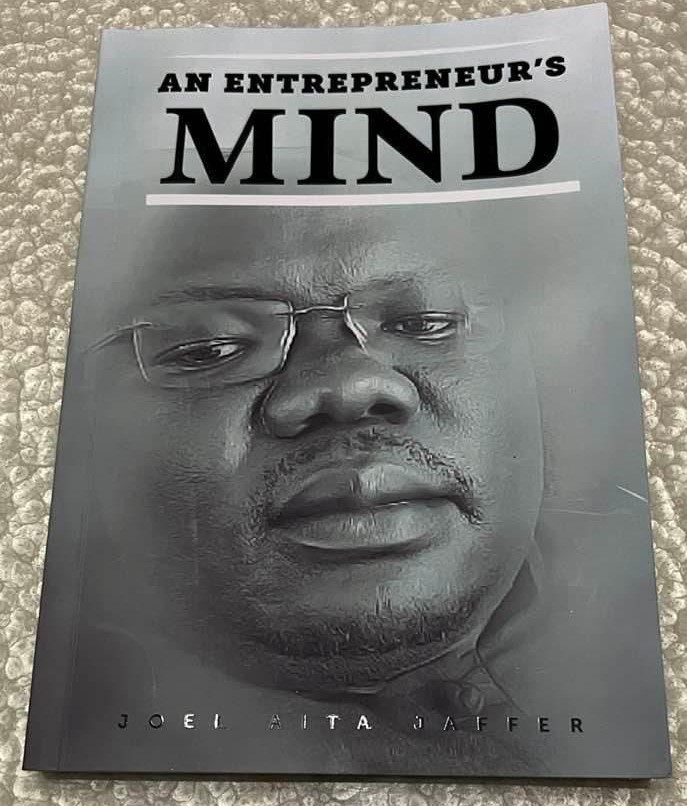
We are grateful to Mr. Ai’ta for his philanthropic generosity allowing us to share this valuable information with our readers, free of charge. Please do visit his website to learn more about him and his many good works. We encourage you to also buy his book to partake some more of his wisdom on how to cultivate “An Entrepreneur’s Mind.”
 CPAR Uganda
Leave a comment