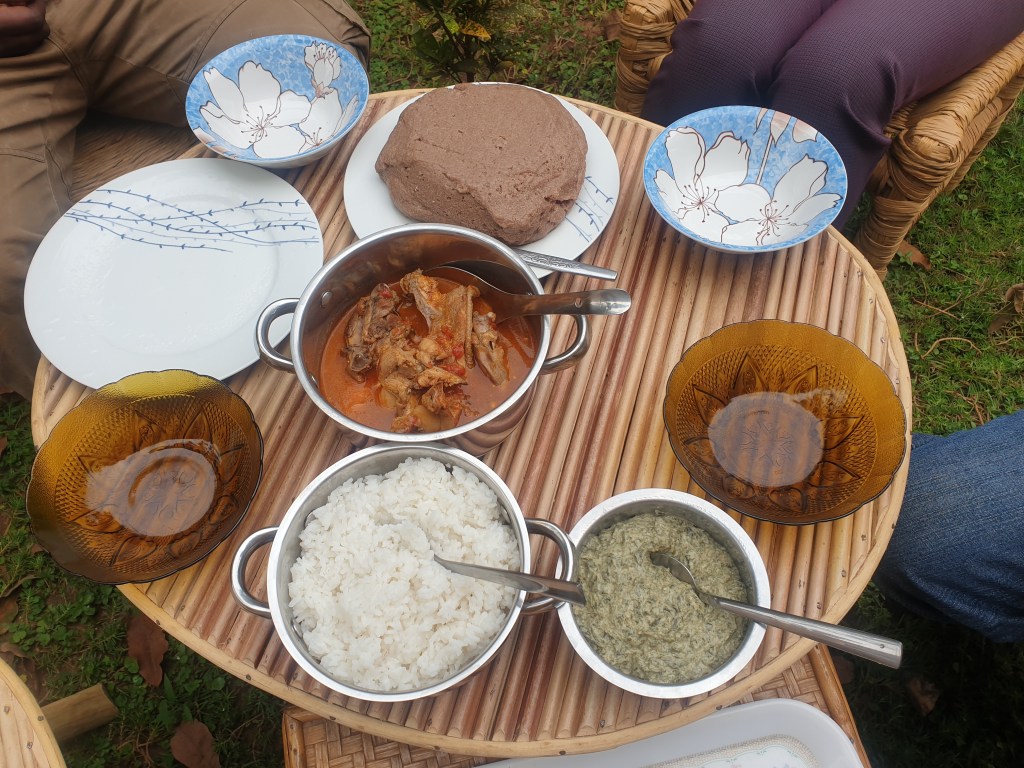
Less than half, 44.1%, of households are food secure in Oyam District, the best performing district in Lango Sub-Region, in terms of food security at household level.
Overall, Lango is not doing well. The majority, 63.7% of households in the region are food insecure. Meaning that the greater majority of households in Lango experience:
“Frequent and prolonged periods of insufficient food intake due to lack of money and other resources, forcing members of those households to skip meals or go an entire day without a meal.”
The state of food security in Lango, by district, and in order of the most food secure is as follows:
- 44.1% of households in Oyam District are food secure.
- 42.7% of households in Lira District are food secure.
- 40.8% of households in Amolatar District are food secure.
- 38.7% of households in Alebtong District are food secure.
- 38.1% of households in Dokolo District are food secure.
- 33.4% of households in Kole District are food secure.
- 31.5% of households in Otuke District are food secure.
- 31.3% of households in Kwania District are food secure
- 25.9% of households in Apac are food secure.
With a population of over 2.5 million, it means that thousands of people of Lango have difficulties accessing sufficient food.
It is consistent with the finding that 12.7% of persons aged 10 years and above in Lango have “probable general psychological distress.”
A story first published in May 2016 and updated in January 2021 in the Monitor and titled: “Children starve as food crisis hits Apac,” gives qualitative insights into why only 25.9% of households in Apac are feasibly food secure.
It is mostly because of their inability to afford to buy food.
Be that as it may, it is surprising that even though a minority of households in the sub-region have food security, the people of Lango have a life expectancy of 72 years.
Information herein is extracted from the most recent Uganda National Population and Household Census Report, by the Uganda Bureau of Statistics. A PDF copy of the report is available to download free here.
Uganda Bureau of Statistics measures food poverty using the Food Insecurity Experience Scale.
The state of food security in Lango, indeed, justifies the joint intervention of the Canadian Physicians for Aid and Relief (CPAR) and CPAR Uganda, the Dr. Paul Hargrave Memorial Center Human Development Project that is intended to benefit disadvantaged communities of Greater Northern Uganda, of which Lango is among.
To LEARN MORE about the work of CPAR Uganda and MAKE A DONATION click here.

 CPAR Uganda
Leave a comment