What does Leprosy have to do with financing economic development at individual and household level at the grassroots?
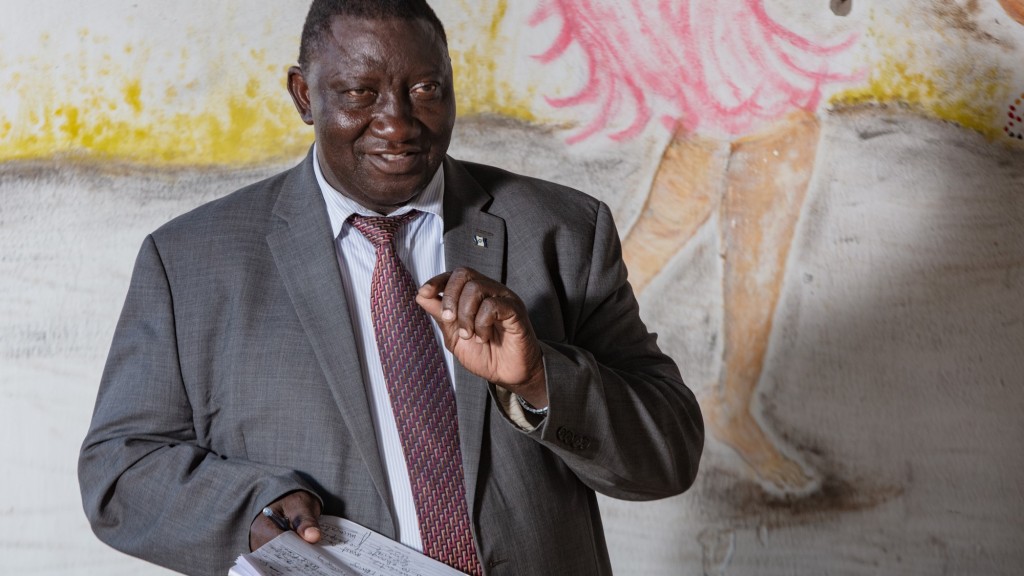
I had never really thought a relationship existed until a mentoring and guidance session I had with the CPAR Uganda Finance Chair, a Board Member, in which capacity he is my boss, but Mr. Alex Bwangamoi Okello is also a great mentor to me.
We were at his office at the Directorate of Ethics and Integrity, Office of the President, where he is the highest civil servant, the Permanent Secretary. We were discussing strategy on how best to intervene at the grassroots.
Mr. Okello effectively got through to me by using the disease Leprosy as an analogy. I honestly did not know details of how Leprosy afflicts, even though I know of people and have seen people afflicted with it. I learnt that Leprosy is a clever disease.
“Leprosy does not affect the central nervous system. However, it can affect the peripheral nervous system (sensory, motor and autonomic nerves) by: sensory nerve damage – when the sensory nerves are damaged, they cannot register pain.” (Source: Better Health Channel)
He first clarified that there is no ‘free money’. As in, for example, if a grant is given or a donation is given, that money given did not come free. There are those who worked hard for it, Mr. Okello emphasized.
According to Mr. Okello, when grants or donations are misused, it is they who worked for it that feel the pain the most; and in some cases, the recipients or beneficiaries do not feel the pain. I agree.
In many cases, moreover, recipients and beneficiaries, have a tendency to perceive grants or donations as ‘free money’. In which context Mr. Okello advises that when it comes to interventions intended to stimulate economic development at individual and household levels there should be no room for beneficiaries to perceive assistance as ‘free money’.
He advises against grants and donations for economic development, because, grants and donations tend to have the opposite effect in the context of the intention to use them to ignite economic development at individual and household levels.
Such grants, Mr. Okello, astutely observes, like Leprosy, dull the pain, slow down the urgency and drive, and thus kill the recipient’s acumen. You see, the conclusive symptoms that one is afflicted with Leprosy take over three years to manifest. By the time they do, when, for example, there are sores on the foot of the afflicted that do not heal, it means there is irreversible nerve damage.
Similarly, grants and or donations, he further explained, can deceive the recipient into complacency and cause them to contract irreversible aid induced dependency thinking, where they lose confidence in their own abilities and self-reliance. In their mind, without external ‘free money’ they are resigned and doomed; and the vicious cycle continues.
I am inclined to agree with Mr. Okello’s assessment about grants functioning as Leprosy does to humans. Important food for thought as I propose and implement development projects.
 CPAR Uganda
Leave a comment