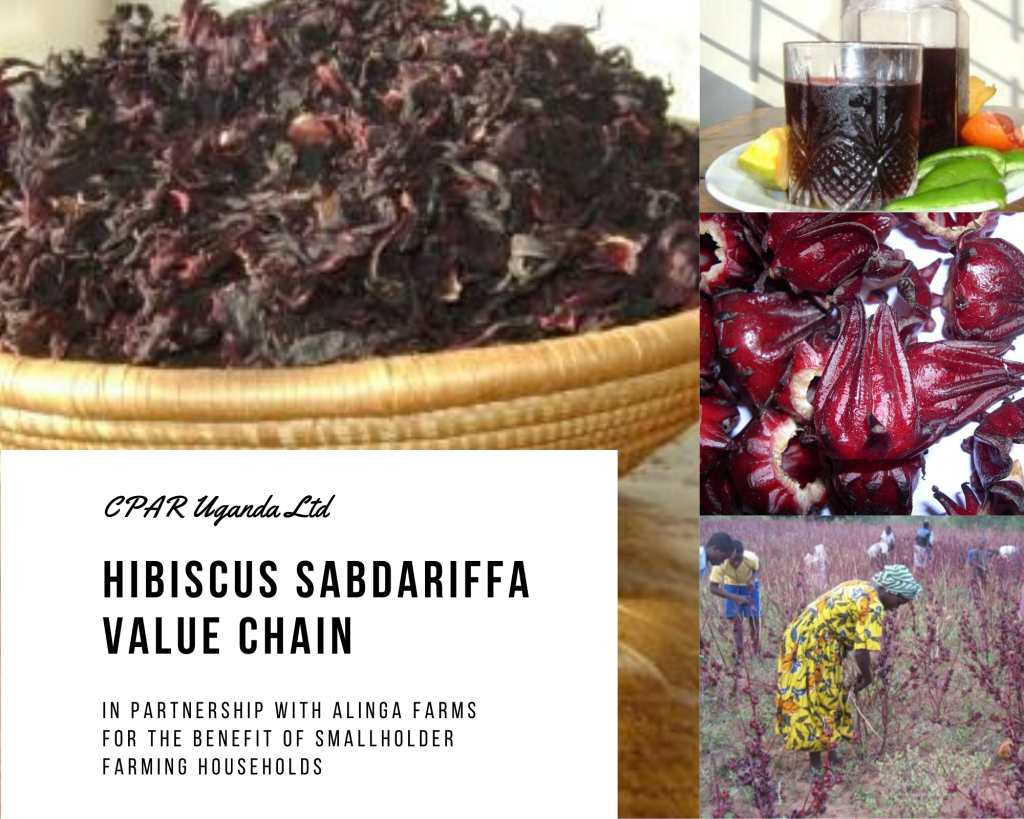
During the last planting season for 2016, through a highly participatory process that was endorsed by elders, we donated start-up Hibiscus Sabdarrifa seeds to 43 pioneer smallholder farmers in Loro in Oyam District in Northern Uganda.
Despite adverse weather conditions, 11 pioneer beneficiary farmers took the risk and planted. They reported harvesting and selling a total of 140 kilograms of dried calyces of hibiscus fruit at 4,000 shillings per kilogram.
Together the 11 pioneer farmers made a total of 560,000 shillings. Considering they got this unexpected income in February 2017, during the time when school fees for the first school term was needed, they were very happy.
Some of the risk averse benefiting farmers reportedly planted around their homesteads a few of the seeds donated to them; and they were able to harvest small quantities of fruit which they dried for home consumption.
Pioneer farmers reserved some of their harvest for own domestic consumption, they testified.
“Hibiscus sabdariffa meal improves iron status of women of child-bearing age with time and could be protective of stunting among toddlers during the dry/lean season.”
Clement Kubreziga Kubuga, Hyokyoung Grace Hong and Won O. Song
Pioneer farmers not only harvested the fruit, but as we had taught them how to do seed selection and preservation, they also harvested and preserved seed for the next season.
Hibiscus has a very high seed multiplication rate. Pioneer farmers reported having enough seed for them to replant and also to distribute to others – sell or donate freely.
The local market price for a kilogram of hibiscus seed in Oyam was reported to be 5,000 shillings.
We freely and successfully shared with participating smallholder farmers the best agronomic practices for hibiscus and are confident that the benefiting farmers should be able to continue developing and sustaining the hibiscus value chain for their benefit – for nutrition and income generation.
It is important to note that hibiscus grows well without the need of artificial chemical fertilizers and pesticides. In which case, it is an environmentally friendly crop.
Mission
CPAR Uganda is on a mission to stimulate the development. dissemination, and widespread application of technologies suitable for conditions in developing countries, in order to contribute to building healthy communities.
Photo Credit: Alinga Farms - Dried calyces, freshly harvested calyces and juice of hibiscus sabdariffa.

 CPAR Uganda
Leave a reply to Impact Report 2016 – CPAR Uganda Cancel reply