
Poverty problem trees are truly a powerful tool for analyzing and appreciating poverty.
And each time one uses them well, it is likely that they will learn something new.
For example, this was the case two weeks ago when I facilitated a session on poverty analysis for a cadre of 12 young adults.
You adults whom are being mentored by CPAR Uganda, under its project: “Mentoring Young Adults into Innovators Against poverty.”
We were going through an exercise to practically develop a poverty problem tree together.
So, I tested their learning and asked them to provide a specific example of how having insufficient knowledge can be the cause of drought and what the effects will be.
I had never thought of it and yet it does really make sense that that would be a good starting point to fight poverty. Particularly, poverty that results from the negative effects of climate change.
The example that our innovators in training gave was so effective in enlightening me. They shared as follows:
LACK OF KNOWLEDGE ON RAIN FORMATION causes people to CUT TREES FOR CHARCOAL BURNING and to CULTIVATE IN WETLANDS. This in turn leads to there being NO RAIN; which in turn leads to there being DROUGHT. When there is drought there shall be LOW AGRICULTURAL PRODUCTION; which will lead to there being INSUFFICIENT FOOD; which in turn will lead to there being MALNUTRITION.
This example is firmly lodged in my mind. I am re-examining campaigns to end poverty.
End poverty campaigns which often emphasize that we should not cut down trees or we should grow trees; and the emphasis on the latter is usually for economic benefit of make money from tree growing.
I think that a more effective campaign against damaging the environment and thus assuring our food system, could be to explain to people how rain formation takes place and how trees are crucial for that process.
You know, like how my 19-year old niece explained it to me and as she remembers being taught it in school in Primary Three (when she was likely 8 years old).
She explained:
“When the trees are hit by sunshine, they transpire and let moisture into the atmosphere to form clouds. When the clouds become heavy they fall as rainfall,” Valerie Alinga
To be on the safe side, I googled how trees form rain and my niece’s explanation is valid. The search result from Google that I got, explained:
“The trees help in bringing rain in an indirect way through the process called transpiration. Through transpiration, trees leave the extra water through the stomata on the leaf surfaces. The water evaporates into the air and adds to the moisture of the air. … During evaporation, trees lose water from the leaves.” Google.com
I first got introduced to poverty problem trees in the 1990s, right after attaining my first degree, when I had the fortune of being employed by Quaker Service Norway and to work on the Change Agent Training Programme,
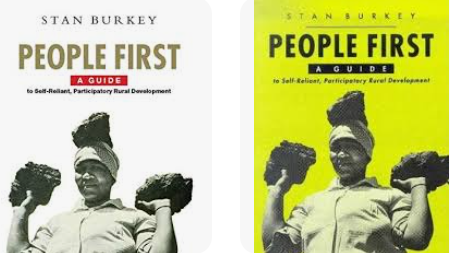 I worked under the stewardship of Change Agent Stan Burkey, the author of the book: “People First – A Guide to Self-Reliant Participatory Development.”


Leave a Reply