“How I wished I got the knowledge before completing school, am sure savings from my pocket money would have done something for me at the moment. I wasted money. But, as they say: better late than never,” wrote Mercy Acen
This is after participating in the first module, “Understanding Poverty in Rural Uganda” of the CPAR Uganda “Mentoring Young Adults onto Innovators against Poverty” program
Her fellow innovators discussed Acen’s testimony and shared how the CPAR Uganda mentoring programme has positively impacted them to adopt the culture of saving.
“My sister your testimony is courageous. I have been hearing people talking about saving and I thought it’s only working class or salary earners who can do saving,” Sarah Amongin expressed her appreciation.
“I realized that my problem was not only saving but also how to spend it too. I would just throw money without accountability but from the mentorship program I stopped doing misdirected priorities.” Acio Sharon Enon shared.
Her consciousness was awakened.
“I used to paint my nails at least twice a week. In a year I spent 480,000 shillings on painting my nails which I could have saved. I decided to learn how to paint my nails myself and buy those paints which is very cheap.” Ann Parlaker Gumkit shared.
A good example of how she got rid of misdirected priorities Sharon hinted on.
“l have also wasted a lot of time and money on things which have not helped me to generate more income for my future, things such as buying clothes for myself have not helped me to save money,” shared Stella Rose Aguti.
Also giving an example of what Sharon pointed to as misdirected priorities.
“I used to think that it’s only salary earners who are supposed to save. I have now learnt that everything one sees big now begins from small. Meaning, whatever little income I get, I need to save part of it in order for me to get to another level – begin small and grow big this is only possible through savings.” Robert Oluka shared.
A lesson to us all to appreciate that every little bit that we can save goes towards helping us achieve that big thing that we want.
“I worked with Plan International for a year, but I didn’t save anything. When time for me to come home came, I didn’t even have money for transport. Instead, I called my parents to send me transport money. That was the time I became so ashamed of myself … But I learnt to have money discipline and save from every penny I get from the business.” Dorah Adoch Komakech.
Her testimony surely rings a bell in all of us, to check on our dependency thinking.
“Ever since I learnt that saving is a tool for future development, I do make my budget before spending. Not like I used to do before and in most cases I would just end up buying unplanned things making me not to have any progress in my life,” Alum Vicky shared her profound insights.
It is through saving that you can realized your dreams. During the first covid-19 pandemic lock-down of March 2020, I already had some savings and kept on saving more from my computer business which later made me to buy my second-hand motorcycle to ease my movement and serve my customers better. We can do something beyond admiring and wishing for that asset. Save for it and we will be able to afford it.” James Opollo
What powerful learning.
“Any little money I get now, there is a percentage that I save and I have told myself to avoid unnecessary spending. I am now applying opportunity cost theory”
Gladys Awino shared.
Opportunity cost theory, we wonder how that works for her when it is making choices among her basic needs, but certainly an interesting concept to explore further.
“I have learnt how to save money and I have given a task to myself that I have to save 200,000 shillings every month no matter what comes,” Salama Isagara has set herself a target.
“I used to give first priority on paying of bills like electricity. It is like every month I used to pay Ugx70,000 on the Umeme account of which after clearing the bills my pocket remains empty. But after the training on cash flows, whenever I get money the first question that I ask myself is: “What income generating project can I invest this money in order to earn me more profits?” Jimmy Ezra Okello, reminded us of how we can prioritize investment.
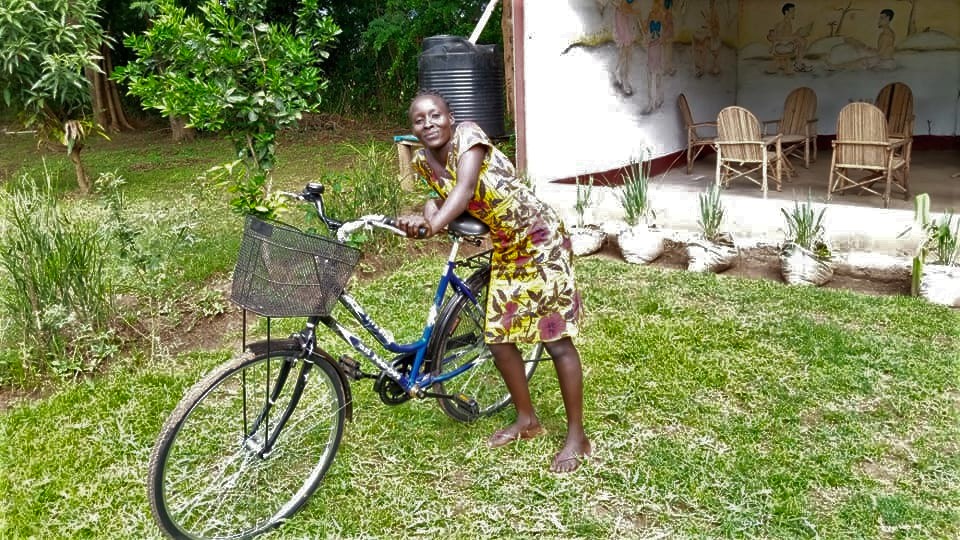
Featured photo is of Amuge Candy Winnie, fondly known to us as Abeja, our Housekeeper. Using her savings from working with CPAR Uganda, she was able to buy a bicycle. She couldn’t wait to show off her bicycle. She goes: “MD, by the way this bicycle is called city bike.” To which Mr. Ongom, Secury Guard, responds: “that bicycle is called: “chwara mara” (my husband loves me).” Abeja insists: “mine is called “CPAR mara” (CPAR loves me).”

 CPAR Uganda
Leave a comment