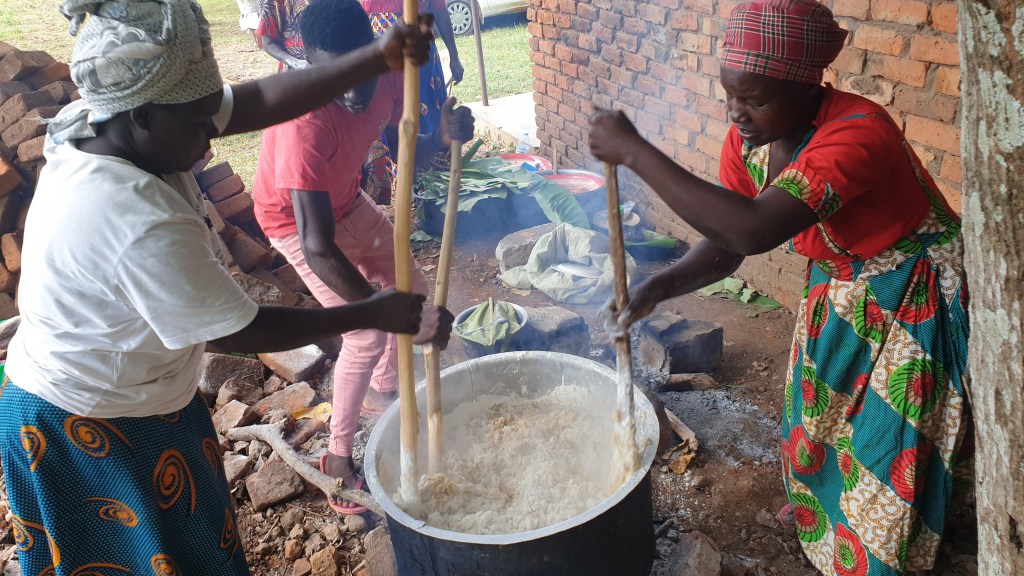
Overall, 31.3% of households in Bukedi Sub-Region are the only ones that are food secure. Kibuku is the best performing district of the region, in terms of food security, but only 38% of its households are food secure.
The level of food security in the districts of the Bukedi and in order of the most food secure, is as follows:
- 38.0% of households in Kibuku District are food secure.
- 35.9% of households in Butaleja District are food secure.
- 33.3% of households in Busa District are food secure
- 31.9% of households in Budaka District are food secure
- 31.8% of households in Butebo District are food secure
- 28.4% of households in Tororo District are food secure.
- 19.9% of households in Pallisa District are food Secure
With a population of 2.4 million people, Bukedi is a densely populated area, with a population density of 516. De facto, thousands of its people have difficulties accessing sufficient food, because the majority of households in Bukedi experience:
“Frequent and prolonged periods of insufficient food intake due to lack of money and other resources, forcing members of those households to skip meals or go an entire day without a meal.”
An article by Yikii, Turyahabwe and Bashaasha, published in the peer reviewed academic journal, Agriculture & Food Security, and tilted: “Prevalence of household food insecurity in wetland adjacent areas of Uganda,” in which 260 households in 26 villages along Lake Kyoga in Pallisa District surmised reasons for food insecurity in Pallisa:
“The primary reasons being poverty, low labour productivity (and/or unemployment), and low levels of education.”
High levels of food insecurity in Bukedi, is consistent with the finding that 15.7% of persons aged 10 years and above in Bukedi have “probable general psychological distress.”
However, it is surprising that even though the greater majority of households in the sub-region are food poor, the people of Bukedi have a life expectancy of 72 years.
Information herein is extracted from the most recent Uganda National Population and Household Census Report, by the Uganda Bureau of Statistics. A PDF copy of the report is available to download free here.
Uganda Bureau of Statistics measures food poverty using the Food Insecurity Experience Scale.
The state of food security in Bukedi, indeed, justifies the joint intervention of the Canadian Physicians for Aid and Relief (CPAR) and CPAR Uganda, the Dr. Paul Hargrave Memorial Center Human Development Project, that is intended to benefit disadvantaged communities of Greater Northern Uganda, of which Bukedi Sub-Region is among.
To LEARN MORE about the work of CPAR Uganda and MAKE A DONATION click here.

 CPAR Uganda
Leave a comment