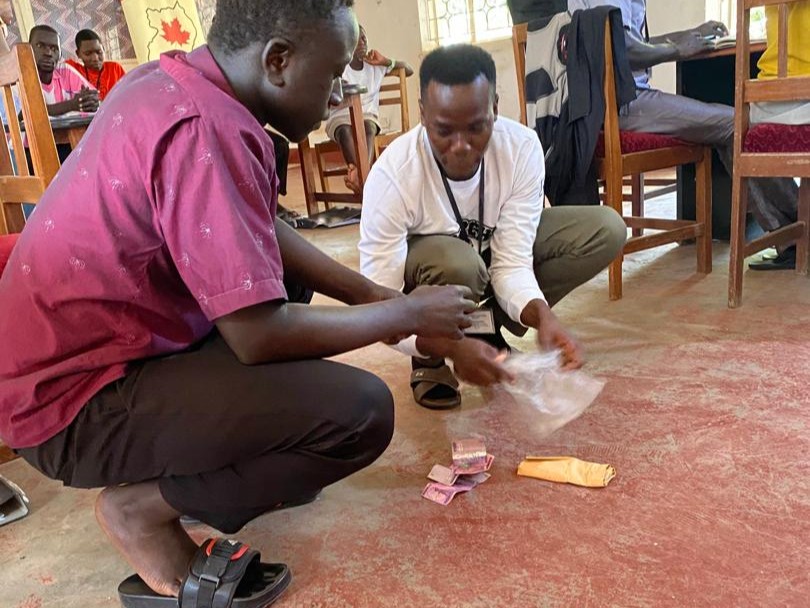


Decades of rural development work have taught us the practice of ‘hot money budgeting.’
Basically, the appreciation that if beneficiaries know it is their own money – ‘hot money’, they will budget for it differently than if it were ‘cold money’ – other people’s money.
Naturally, when it is ‘hot money’, they will be more frugal in budgeting and utilization than if it were ‘cold money’.
We have used our learning to ease our organisation’s budgeting for feeding of participants of the series of training courses that we conduct at our centers. In our budget we put in a daily feeding and participation allocation for each participant.
Each participant is paid their allocation, but with a caveat that they must workout with the rest of the training group on how much of the individual allocation they will pay back into the training group’s feeding fund and how much they will retain as their ‘participation allowance’.
Together as a group, the participants are required to manage their feeding fund to ensure that they provide for their training meals. At the same time, they are motivated and ‘self-police’ individual attendance in order to ensure that only those who participate get paid the ‘participation allowance’.
We use ‘hot money’ budgeting to conduct hands on training on bookkeeping, financial management, budget control, financial decision-making, transparency, accountability, leadership, conflict resolution, among others.
We also use ‘hot money’ budgeting to raise conscious-awareness that households without affluence, can feed on a balanced diet on locally available food items. Either purchased from the local market; and or locally produced items, bought directly from farming households.
Conversations during the participant’s business session, when they make decisions about their feeding allocation fund, are robust and are hilarious, always. As they want to save as much as they can, but within the instruction that they must have at least three meals per day; and an overall, balanced diet.
The more they save the better for them individually. And so they are motivated to be frugal and not feed on a ‘king’s diet’ on a ‘king’s budget’; but they strive to feed on a ‘king’s diet’ on a ‘pauper’s budget’.
On our side, as the implementing organization, we have a fixed budget for training participant’s feeding, which makes our budgeting easier.
And since the participants are in control of the budgeting for their feeding, we are relieved of the burden of participants’ complaints regarding quality and quantity of meals during the training.
 CPAR Uganda
Leave a comment