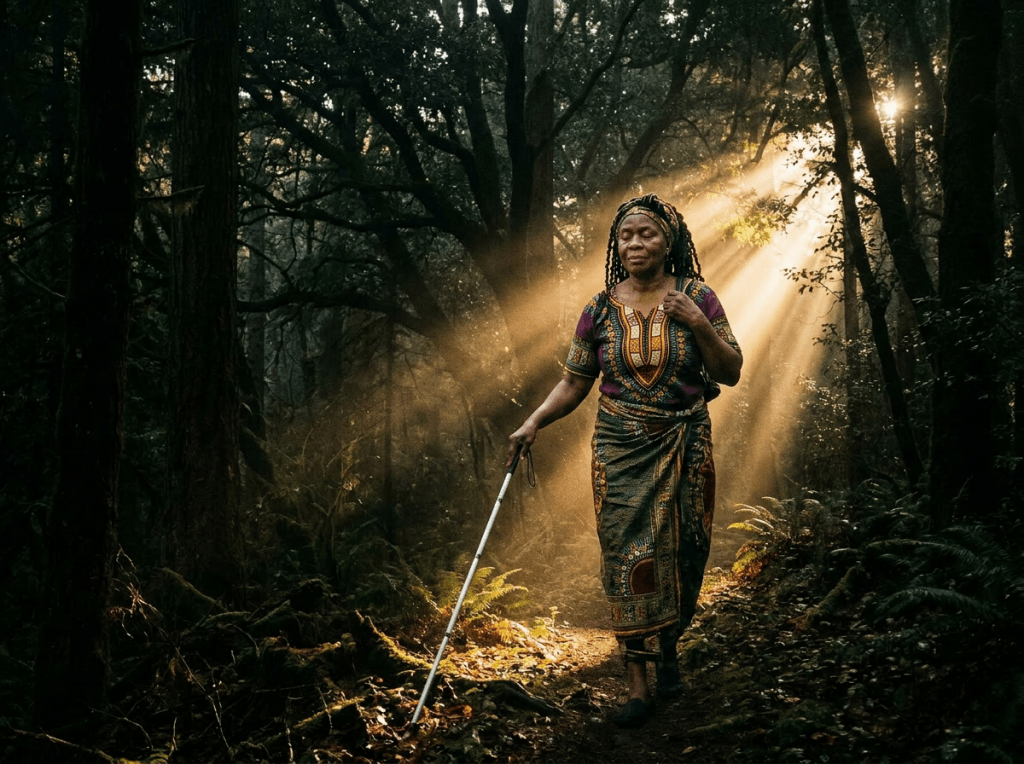


“My family chased me from the garden when they noticed I was pulling out the plants instead of the weeds,” she said quietly. “That was when they decided that enough was enough and brought me to the hospital”, she continued. Gently led by the hand of an attendant, she entered the consultation room. On examination, I found that both of her eyes had total white cataracts, completely blocking any light from entering her eyes. She had been living in total darkness. Puzzled, I asked, “Why were you trying to weed when you can’t see anything?” She replied softly, “I didn’t want people to think I was blind and helpless.”
This quote is from a post shared on X, on 21st March 2026, by an award-winning female Ugandan eye doctor, Dr. Gladys Atto, the only ophthalmologist in Moroto Regional Referral Hospital, a public hospital.
Actually, she is the only eye doctor serving the whole of Karamoja sub-region, with a population of about 1.5 million people.
She never ceases to amaze in her quest for excellence and professionalism in delivering eye care services; while going above and beyond to humanize blindness.
“Humanizing blindness means moving past stereotypes and pity to recognize visually impaired individuals as independent, capable, and multifaceted. It shifts the narrative from “tragedy” to inclusion, emphasizing accessible technologies, equal opportunity, and the lived reality of navigating a primarily visual world.”
Sadly, she is mostly a lone voice. Many in Uganda have significantly internalized stereotypes on blindness and it is visible in words, actions and implementation public policy.
“I didn’t want people to think I was blind and helpless.” This is the prevailing and dominant belief in Uganda that going blind necessarily means your life is over.
We celebrate with her and celebrate her.
We love to read her many stories in which she has used her magical hands to perform surgeries that are saving people from avoidable blindness, one indigent patient at a time.
Knowing the terrain in which she works – hard to reach places; and with the little resources allocated to public healthcare services, she is an inspiration.
She inspires us to overcome our fears not to do on grounds “there is no money”.
If she can do it with the little that she has and achieve immense positive impact, we too can aspire to be like her.
Everyday heroes such as Dr. Atto, inspire us to shelf our paralyzing fears of failure and to do that which we can with the little that we have.
Every little bit counts!


Leave a comment