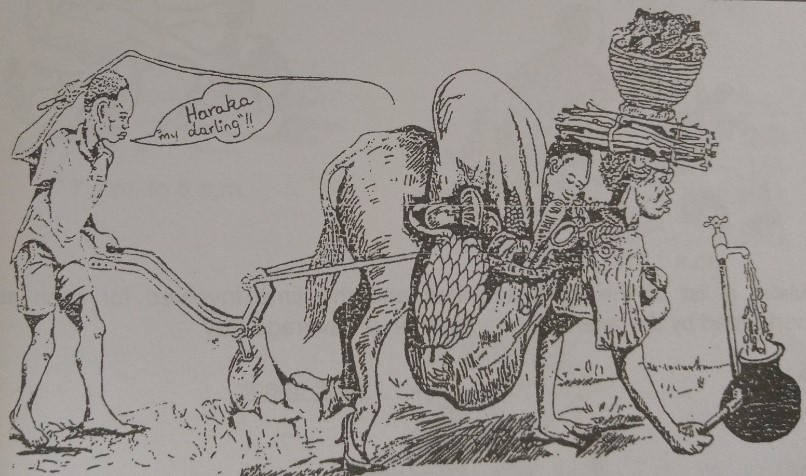
In my village in Amuria District, in Teso sub-region, men embrace the idea of having shared responsibilities.
So no, “Haraka My Darling” is not happening in my clan, Ikatekok Ikaalen.
Whenever I am in the village and it is harvesting time, for example, we all go to the garden to do work, both girls and boys, women and men, who are available at that moment.
After the gardening the girls wash utensils and cook; while the boys go to fetch water and graze the cattle.
Whereas, the situation in “Haraka My Darling” might still be happening, I have not yet seen it.
In fact, for my own family, I remember a scenario when we all, mother, father and us the children, went to the garden. After some time, my father went back to prepare breakfast for us. And the same is for my uncles too, I have seen them do similar.
In fact, my mother describes the men of my clan as hardworking and down to earth. This is because they try in whatever they can to share responsibility.
My take on this caricature: “Haraka My Darling” is aligned with the views of Mr. Luswata Philip. I totally agree with Mr. Luswata’s. comment in response to the blog post “The Woman in Me.”
He challenged a certain perception of gender issues as applied to rural Uganda.
 This sort of story has always intrigued me. I was brought up by my mother, who was most of the time away working at her corporate job. So, my image is that Mum goes off to work. In the case of this story, however, it is dad who goes away, and mum stays at home. So, we are able to observe her digging, harvesting, etc. Because we don’t see Dad and where he goes, the assumption is that he leaves it all to Mum. Is there room to appreciate what these rural men do when they leave home? Would life be any better if these rural fathers never left at all? How do they manage to build their homes if when they leave home, they just go to drink? Is there opportunity to consider that going to the local drinking place could actually be a benefit to the home – counselling; work opportunities; abreast with local developments and best able to negotiate the best for family, etc. Why have such stories endured? Maybe that is just how it is best… what is the percentage of such scenarios? Who pushes for this? Is there space for consideration that Mum, in this case, may be marking her territory? If everyone has seen her till that plot, it is easier to argue that it is hers… May be, it is empowering after all and it’s the academics that are happy to romanticize it as a challenge. What is the equivalent of this in the corporate world?
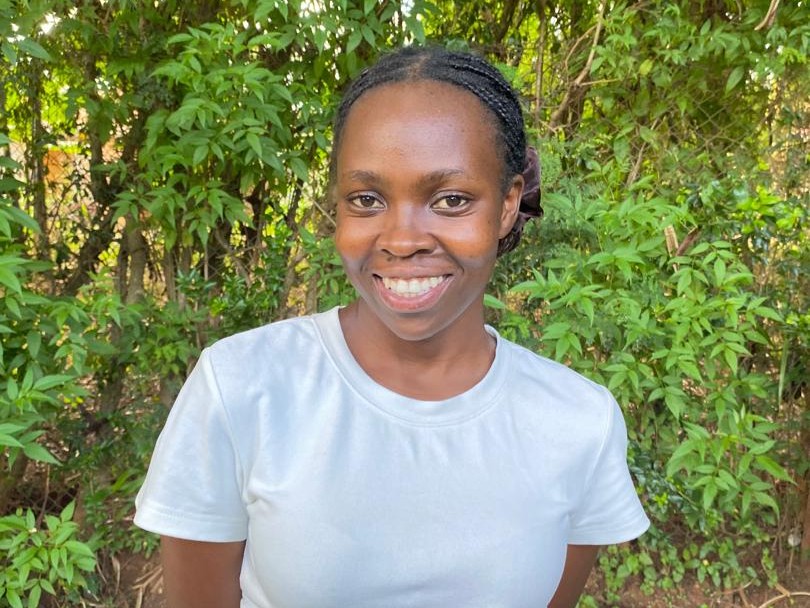 The Author, Amujal Martha, Research Change Agent, is a beneficiary of the Dr. Paul Hargrave Memorial Centre Human Development Project, jointly implemented by CPAR Uganda and Canadian Physicians for Aid and Relief. CLICK HERE to read more about her.


Leave a Reply