“Olumbe lw’obwavu (the tragedy of poverty)”, by Afrigo Band comes to my mind as a timeless and impactful song in my life.
While I exalt the craftmanship that put together the music – the instruments syncing beautifully to produce a masterpiece; the lyrics I love more.
The lyrics in Luganda, the language of the largest first nation of Uganda, are so powerful.
The gist of the song, “olumbe lw’obwavu”, is a narration of the plight of active poor, who are trying to make a living and improve their lot, but tragedy befalls them always – including, among others, the challenges making it in business.
Testimony
I couldn’t help thinking of “olumbe lw’obwavu” when I read Adiyo’s testimony.
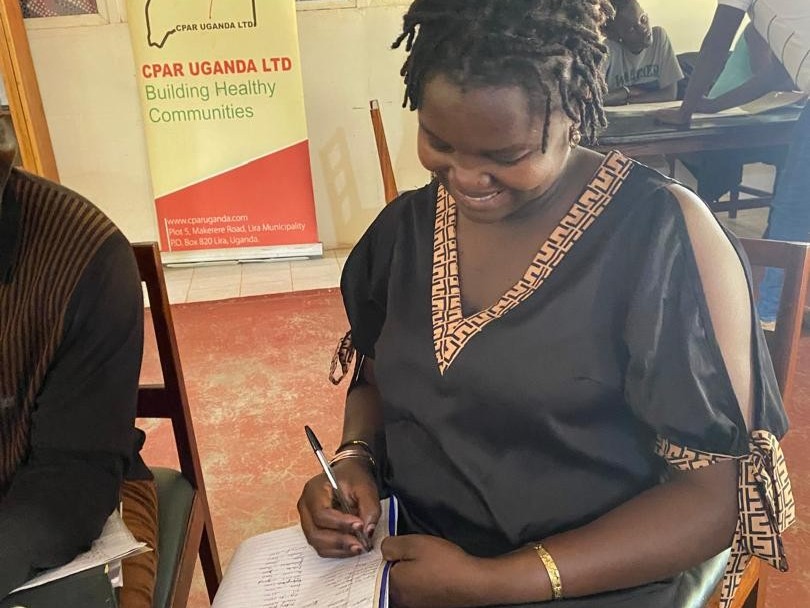
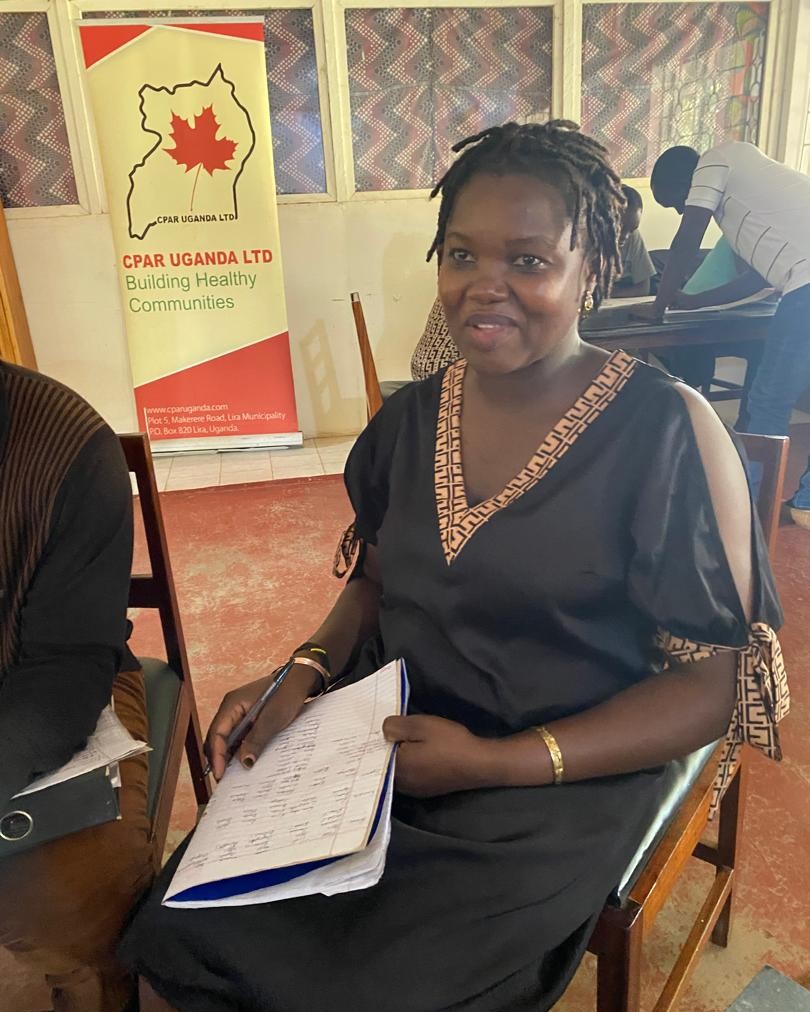 Self-Reiiant Participatory Development Change Agent Adiyo Betty Ekimu at our Financial Management Training Course at our CPAR Uganda Dr. Paul Hargrave Memorial Centre.
In a WhatsApp message to our CPAR Uganda Change Agent Community Group, Adiyo shared:
I used to sell avocado in Lira Central Market.
But after learning bookkeeping, when I attended the CPAR Uganda Financial Management Training, I realized I was working on building other people’s wealth.
The market taxes are so high.
I was renting two stalls, each at Shs. 20,000, therefore, per month I paid rent of Shs. 40,000.
Electricity charge per month was Shs. 6,000.
Garbage charge per month was Shs. 12,000.
Then there was a daily fee of Shs 500; making the monthly fee Shs. 15,500.
Then came in other market issues, like deaths. Per death, you are forced to pick from operating capital, in order to ‘donate’, not less than Shs. 5,000.
Imagine the second wife to the chairperson has lost a kid, so and so lost a grandmother, you have to pick money to cover condolence contributions for people you don’t even know.
Now, here comes my transport fare per day, which was Shs. 5,000; per month at least Shs. 100,000.
And my house rent. A very big house that I later realized I didn’t need. I woke up.
By the way I added in a lot of capital trying to rescue the business. I even went for loans.
Thank you to our trainer, who taught me a lot of calculations and which made me to realize I didn’t even need the loans I was taking.
All I needed to do was to drop my avocado market vending business and get another business. So, I opened up a very good restaurant.
“To run a business, you must understand the kibaalo (calculations). Otherwise, you will work and stagnate.” 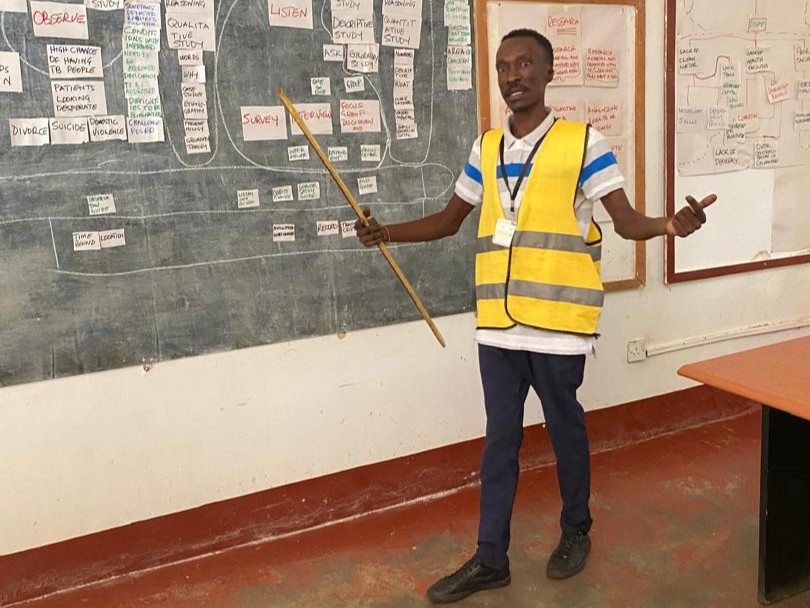 Self-Reliant Participatory Development Change Agent Elyetu Emmanuel Canibus, reacted to Adiyo’s testimony. In the photo, Elyetu is at our CPAR Uganda Dr. Paul Hargrave Memorial Centre. Elyetu participated in our Training of Change Agents in Income Generation Course and also our Participatory Action Research Masterclass, under the Dr. Paul Hargrave Memorial Centre Human Development Project, jointly implemented by CPAR Uganda and Canadian Physicians for Aid and Relief.
 The focus of this course, which Adiyo benefited from, was to endow beneficiaries with financial literacy skills to enable them to keep good books of accounts and use financial records to make investment decisions. Beneficiaries were skilled in Cash Book Accounting. The training was hands-on. Including handling and managing physical cash; as well as generating and using daily cash-flows – budgets and reports for decision making.
Whereas, our financial management training was general and not specific for avocado trading, Adiyo was able to apply the knowledge to make decisions about her avocado business.
Assuming Adiyo was retailing a sack of avocados at Shs. 50,000 per sacks; her minimum monthly costs could have bought 4 sacks of avocados!
Avocados are perishable goods and the risk of losses is significant.
For Context: “The Gross margin of avocado traders was 25.2%. The results showed that education level and demand had positive significant effect on avocado profitability. The following recommendations were suggested; creating awareness campaigns to educate traders on the potential financial returns from avocados.” Extracts from abstract of empirical study “Profitability of avocados in Mukono District, Uanda (Mukhaye, 2024)”
Adiyo’s is a success story.
CPAR Uganda’s mission is to “stimulate development, dissemination and widespread application of technologies suitable and adaptable for Uganda.”
Adiyo’s story exemplifies CPAR Uganda’s theory. That providing financial literacy training can lead to beneficiaries initiating and sustaining own economic development activity.
And therefore through own self-reliance escape “olumbe lw’obwavu.”
GRATITUDE: We are indebted to kin of late Dr. Paul Hargrave for the legacy grant that they bequeathed to us which has enabled us to positively impact the lives of hundreds of youth of Greater Northern Uganda from disadvantaged backgrounds.


Leave a Reply