
In January 2020, before COVID-19 hit Uganda and forced us into a lockdown, CPAR Uganda had the opportunity to launch our project: “Mentoring Young Adults into Innovators against Poverty” for which we are online fundraising in partnership with the GlobalGiving Foundation.
As lead mentor, it is exciting that knowledge that I prior acquired in the 1990s while working alongside my mentor, Stan Burkey, as we implemented the Change Agent Training Programme, is still relevant.
Specifically, the unique system which Burkey developed of giving participants their feeding allocation upfront in form of cash; and then requiring them, as a group, to take full responsibility for their cash in a group fund and their feeding during the training.
We effectively used Burkey’s system in conducting “Module I: Understanding Poverty in Rural Uganda” of our mentoring programme. For a duration of 24 days of non-residential training, the young adults participating in our programme were required to do the budgeting for their food; the purchasing of the food items; the hiring of cooks; and the supervision of the cooks.
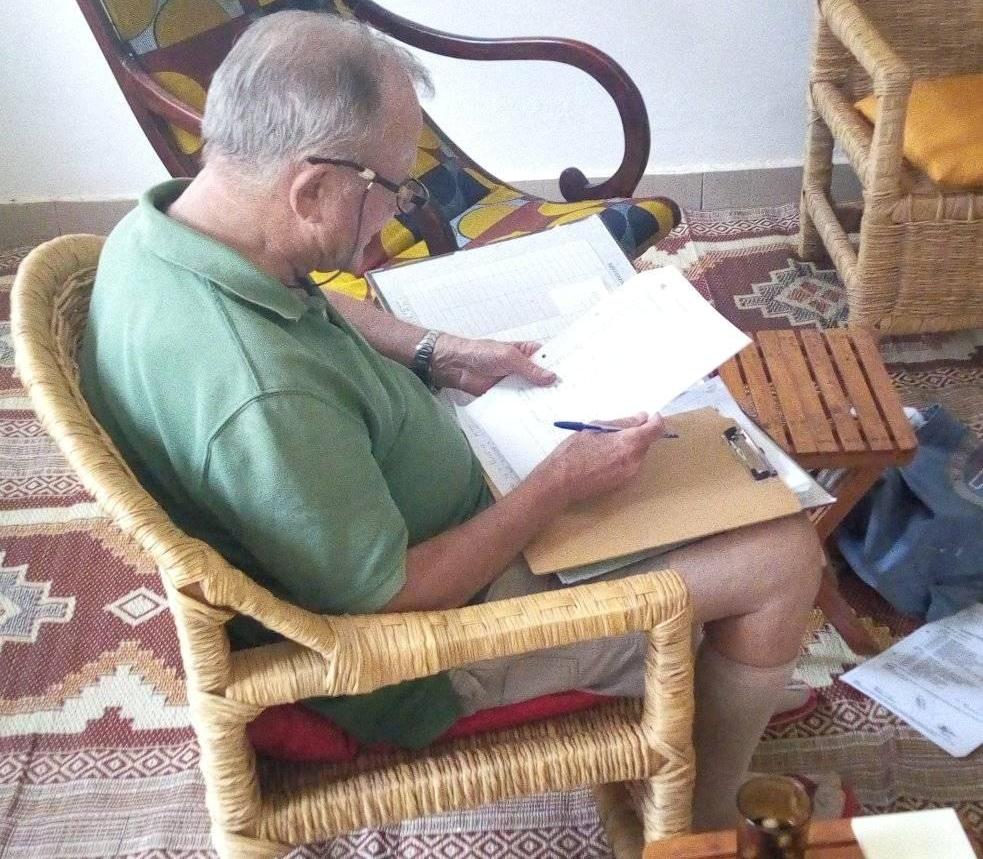 Stan Burkey, at our Entebbe Office, voluntarily assisting with the selection of young adults for our mentoring programme.
Utilising donations to CPAR Uganda that we received via GlobalGiving, we gave each of our innovators in training a total feeding stipend of Ug.shs 168,000 (one hundred and sixty thousand shillings) for the 24-days of training.
As a group, they decided that each contributes Ug.shs 120,000 (one hundred and twenty thousand shillings) to the group feeding fund; and thus instantly each retained Ug.shs 48,000 (fourty eight thousand shillings) as pocket money and which they may have used to cover other expenses for them participatng in the training.
Right away, they began to appreciate the philosophy of ‘living within one’s means’ and the feasibility of one being able to generate personal savings even from small amounts of money. The feeding stipend that they received was Ug.shs 7,000 per day per person.
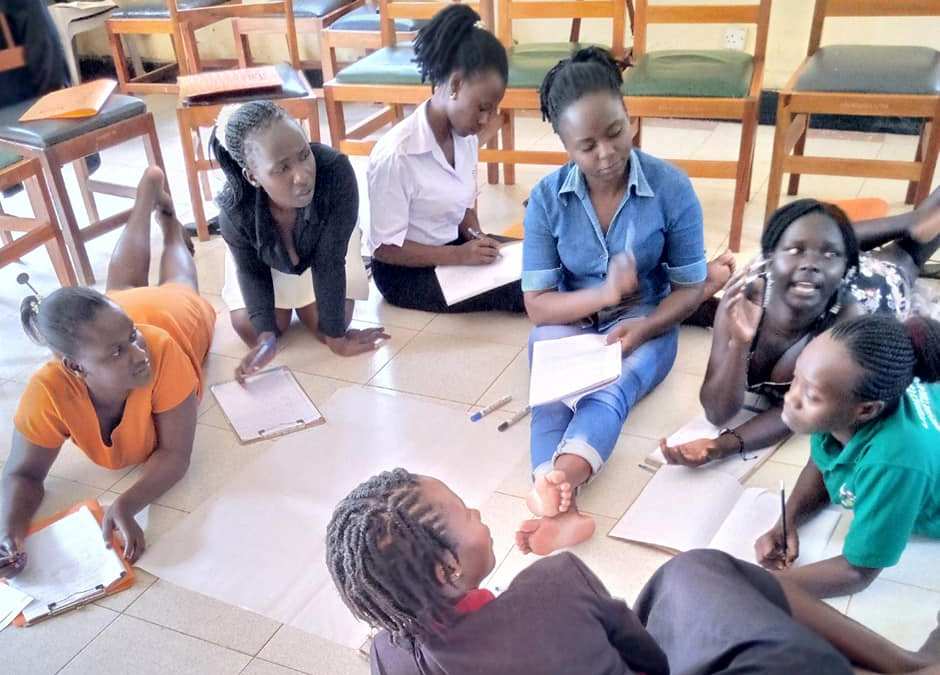 Female innovators in a group discssion during their Module I Training Sessons
The group decided that they each contribute Ug.shs 5,000 per day per person to the feeding fund; which instantly generated a saving of Ug.shs 2,000 per day per person.
In addition, according to the actual food purchasing forms for their 24 days of training, they spent, on average, Ug.shs 4,100 (four thousand one hundred shillings) on feeding per day per person. This means that at the end of the training they shared dividends of Ug.shs 900 per day per person.
Total savings which our innovators in training each made from their feeding allocation, therefore, were at least 2,900 per day per person (2,000 instantly at the beginning and 900 at end of training) – a total of Ug.shs 69,600 (sixty nine thousand six hundred shillings) for the 24 days per person; which was 41 percent of their feeding allocation.
We consumed four meals per day – breakfast, mid-morning refreshements, lunch and mid-afternoon refreshements. A review of actual food items purchased shows that during the 24 days of training we ate fairy nutritionally balanced food.
Food items purchased were: milk, eggs, bread, groundnuts, rice, amaranth, sweet bananas, cassava, millet, eggplants, tomatoes, pineapples, onions, beef, margarine, matooke (cooking banana), potatoes, sugar, cooking oil, salt, cabbages, chicken, carrots, green peppers, beans, cowpeas leaves, mandanzi, passion fruits, oranges, tea leaves, seasoning, Shea oil, lemons, fish, sim sim (sesame), and maize flour.
Post training, one of the innovators, Gumkit Ann Parlaker, shared how she is now practically using her learning to track daily expenses at her home and which has ensured that they are no longer spending a lot of money unecessarily.
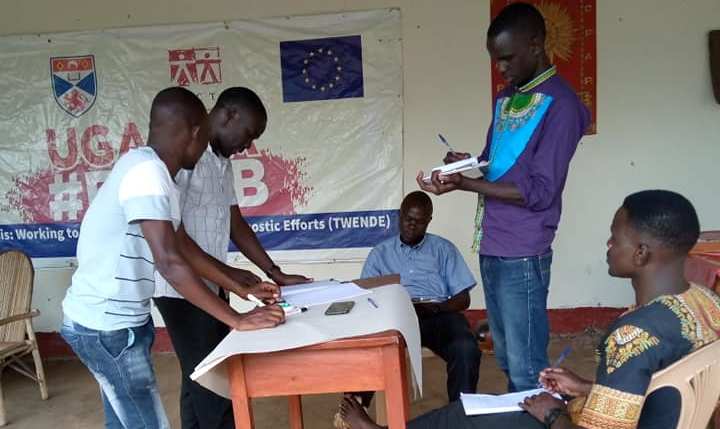 Male innovators in group discussions during their Module I training sessions.
No doubt, Burkey’s unique feeding allocation method continues to prove effective in providing a setup for participants to practically experience and learn such life skills as:
- Participatory group decision making
- Conflict management and resolution
- Financial management and accountability
- Budgeting and budget control
- Making a nutritionally balanced menu for humans
- Culture of saving


Leave a Reply